RESIDENTIAL
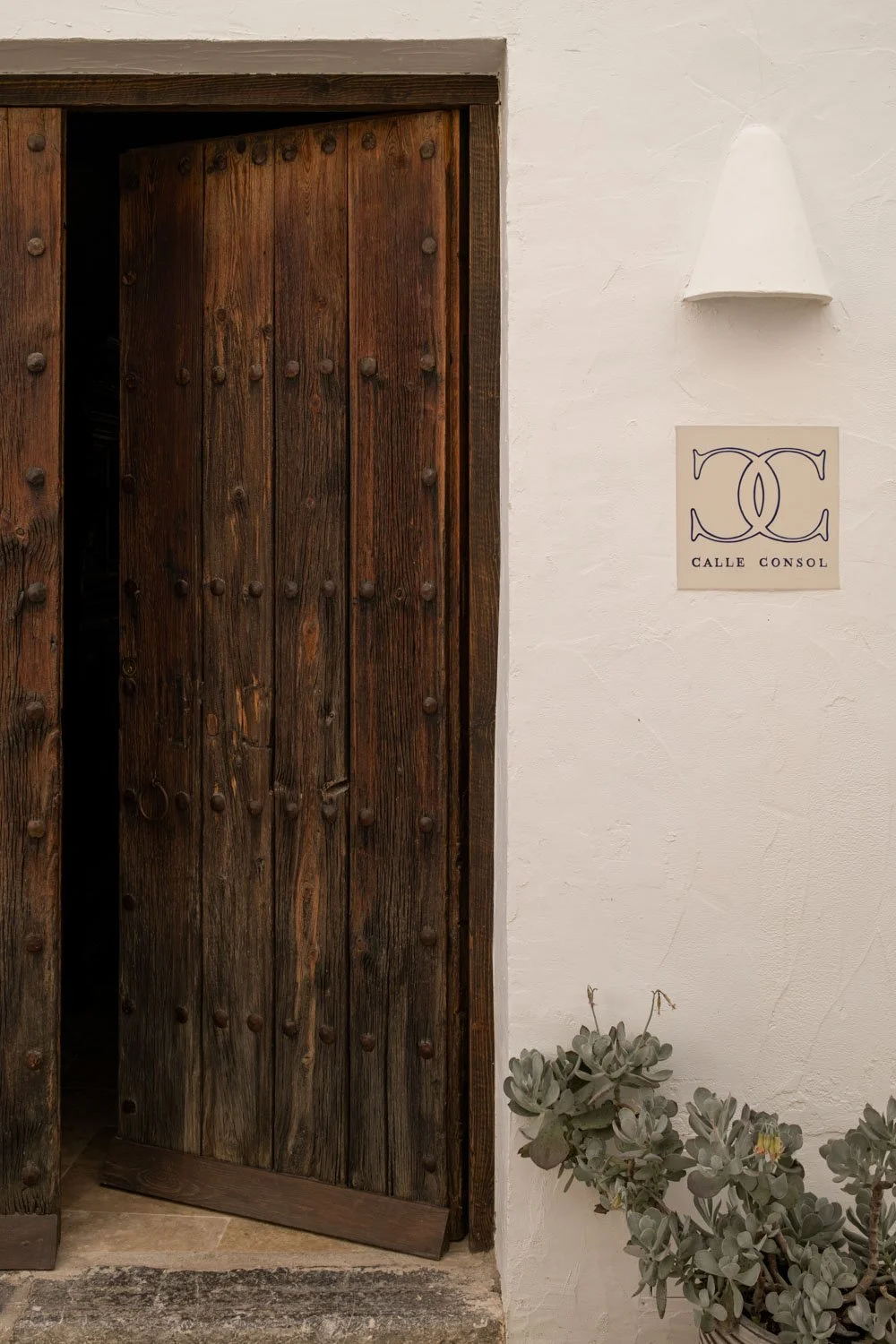
CALLE CONSOL
Altea, Spain
Restored townhouse in the old town of Altea, Costa Blanca.
Interior design: Atelier Valencia
SERVICES
LOCATION
Altea sits on the Costa Blanca, north of Benidorm, on a hillside overlooking the Mediterranean sea. Its old town is one of the most preserved historic centers on this coast, a network of narrow streets, whitewashed walls, and the blue-tiled dome of Nuestra Señora del Consuelo at the top. Calle Consol runs through this part of town, an address that gave the project its name and shaped its architectural language.
ABOUT
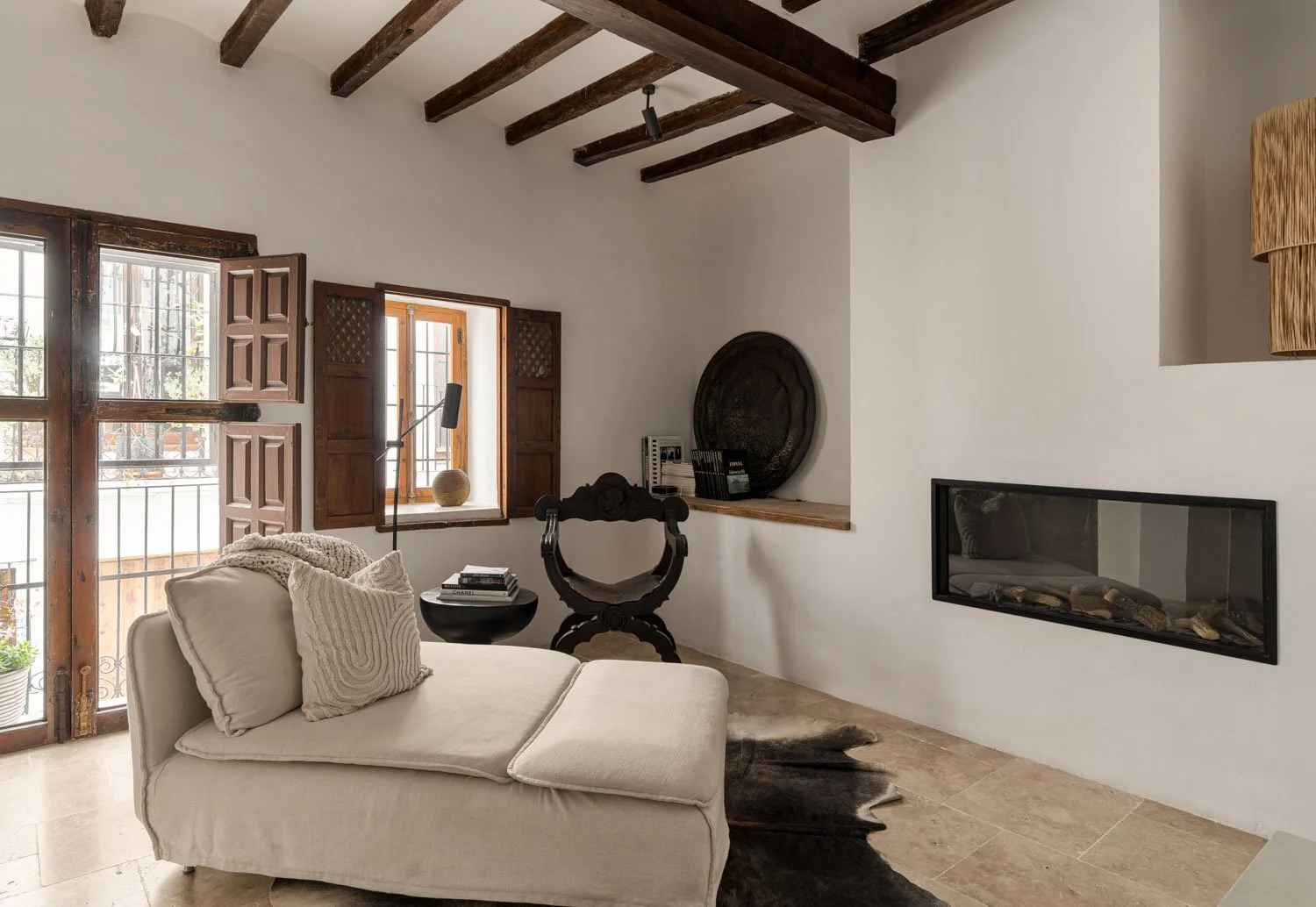
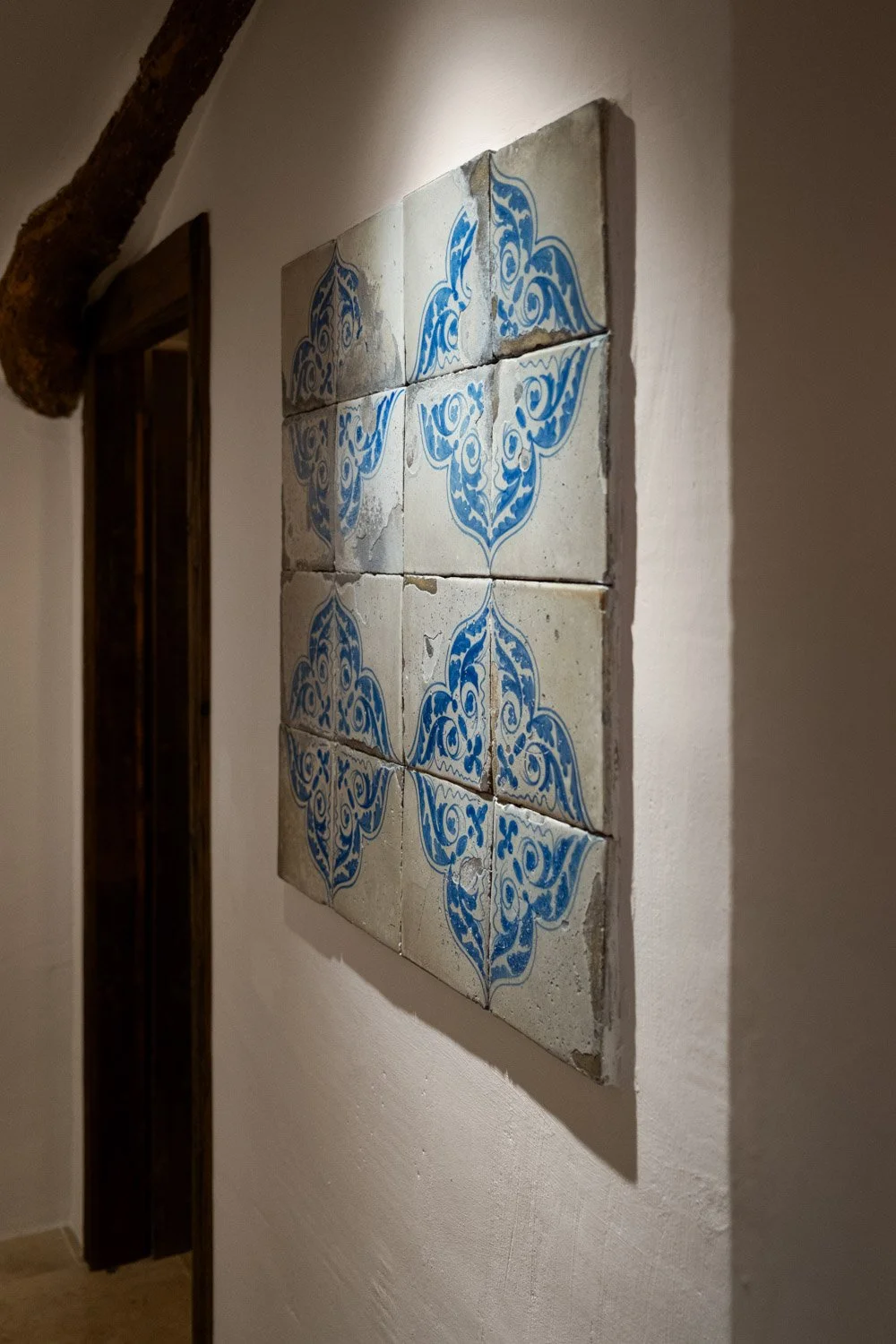
A private townhouse in the historic center of Altea, on the Costa Blanca. Atelier Valencia restored the original architecture and added a modern design layer on top of it. Exposed wooden beams, antique doors stayed. Dark oak millwork, hand-carved stone basins, and a custom marble desk arrived. The session was commissioned for the studio's portfolio and shot together with a Project Film.
MATERIALS
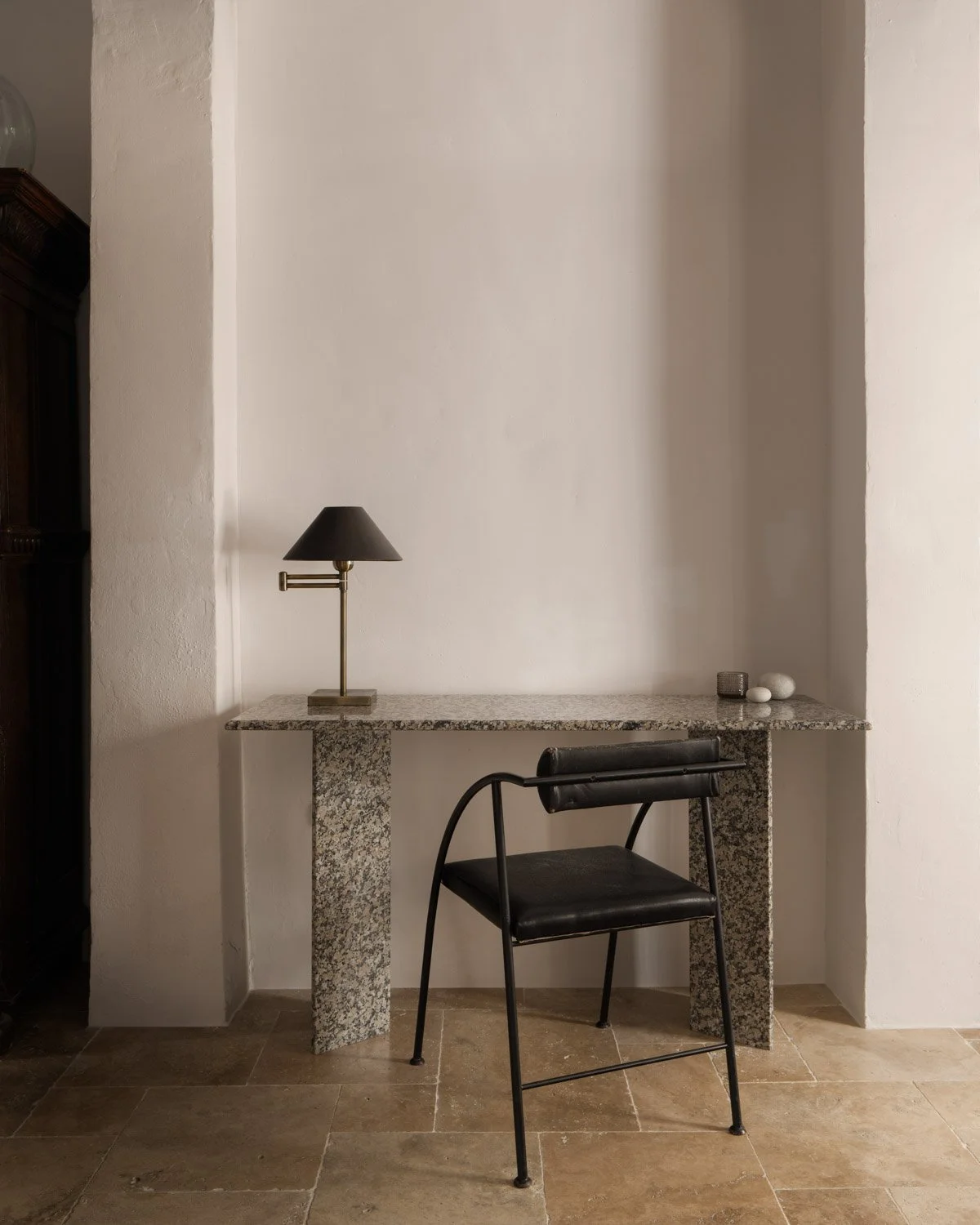
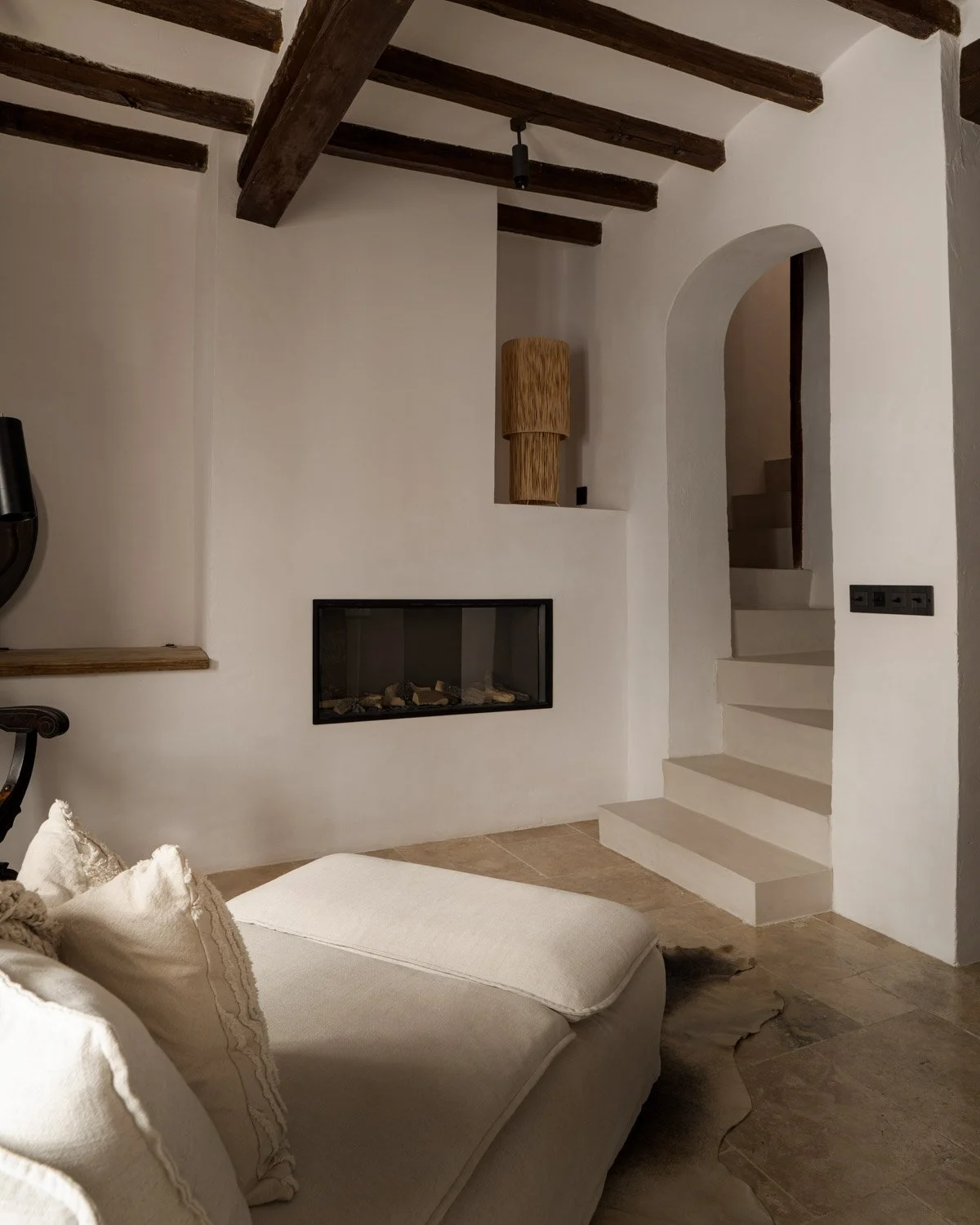
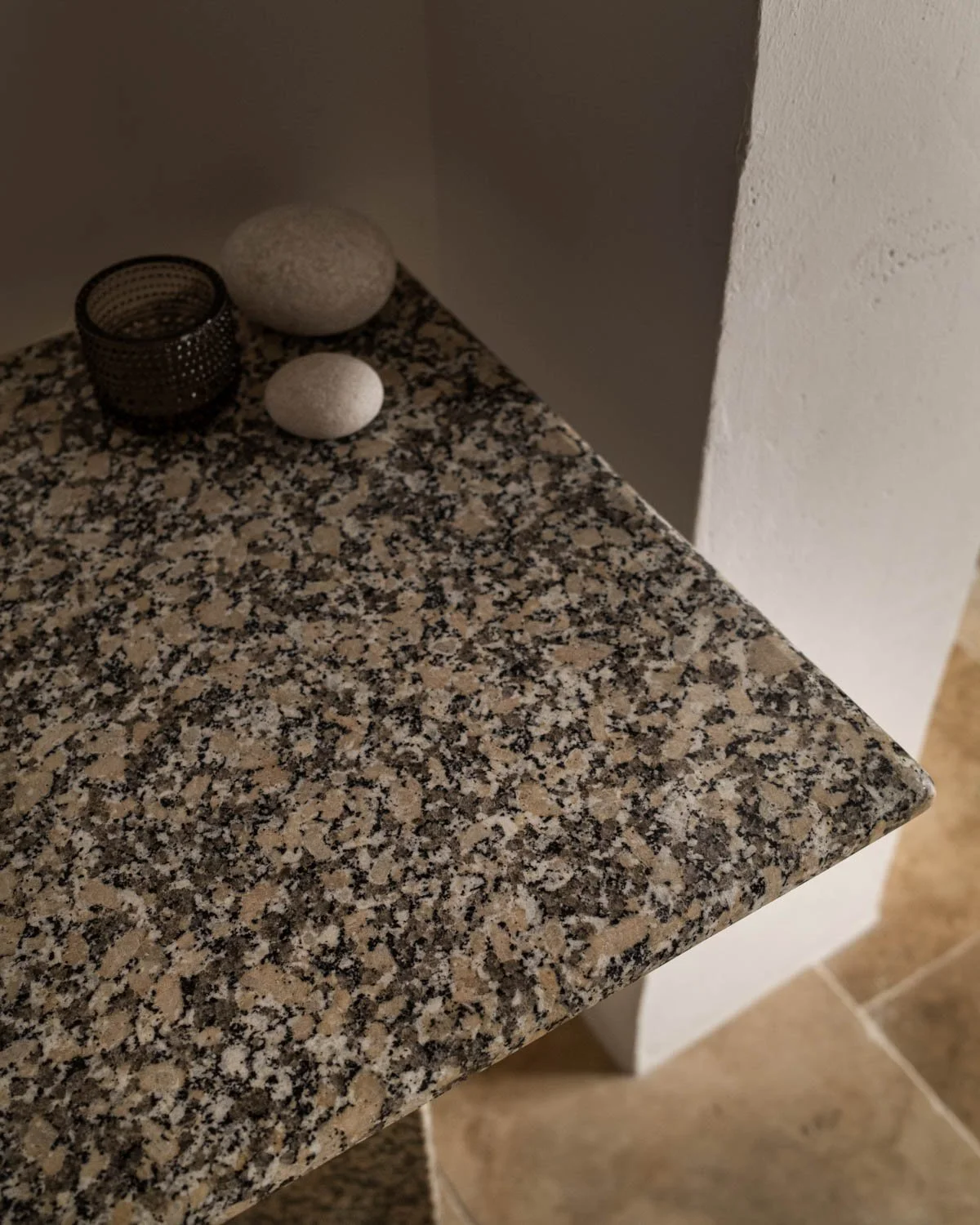
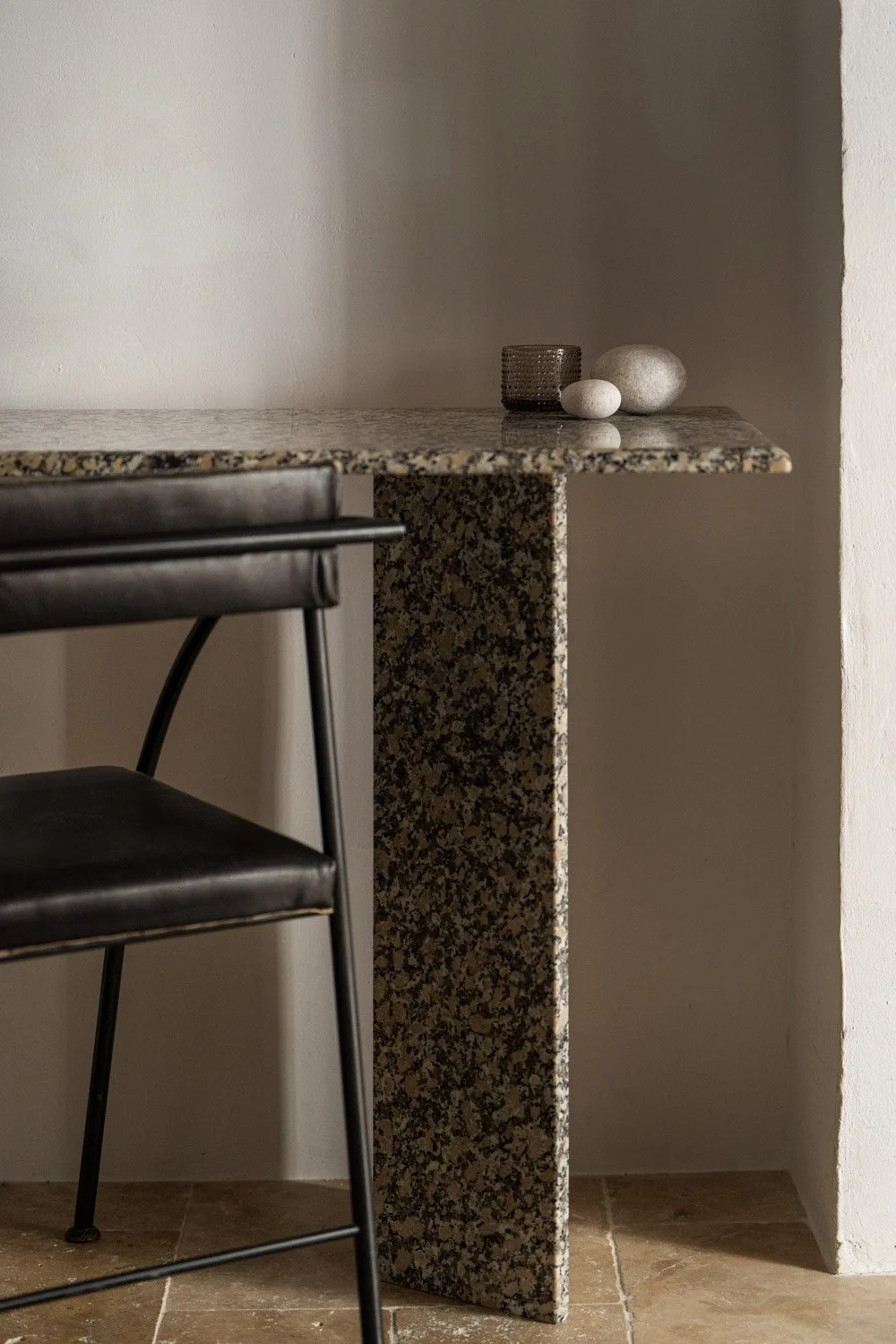
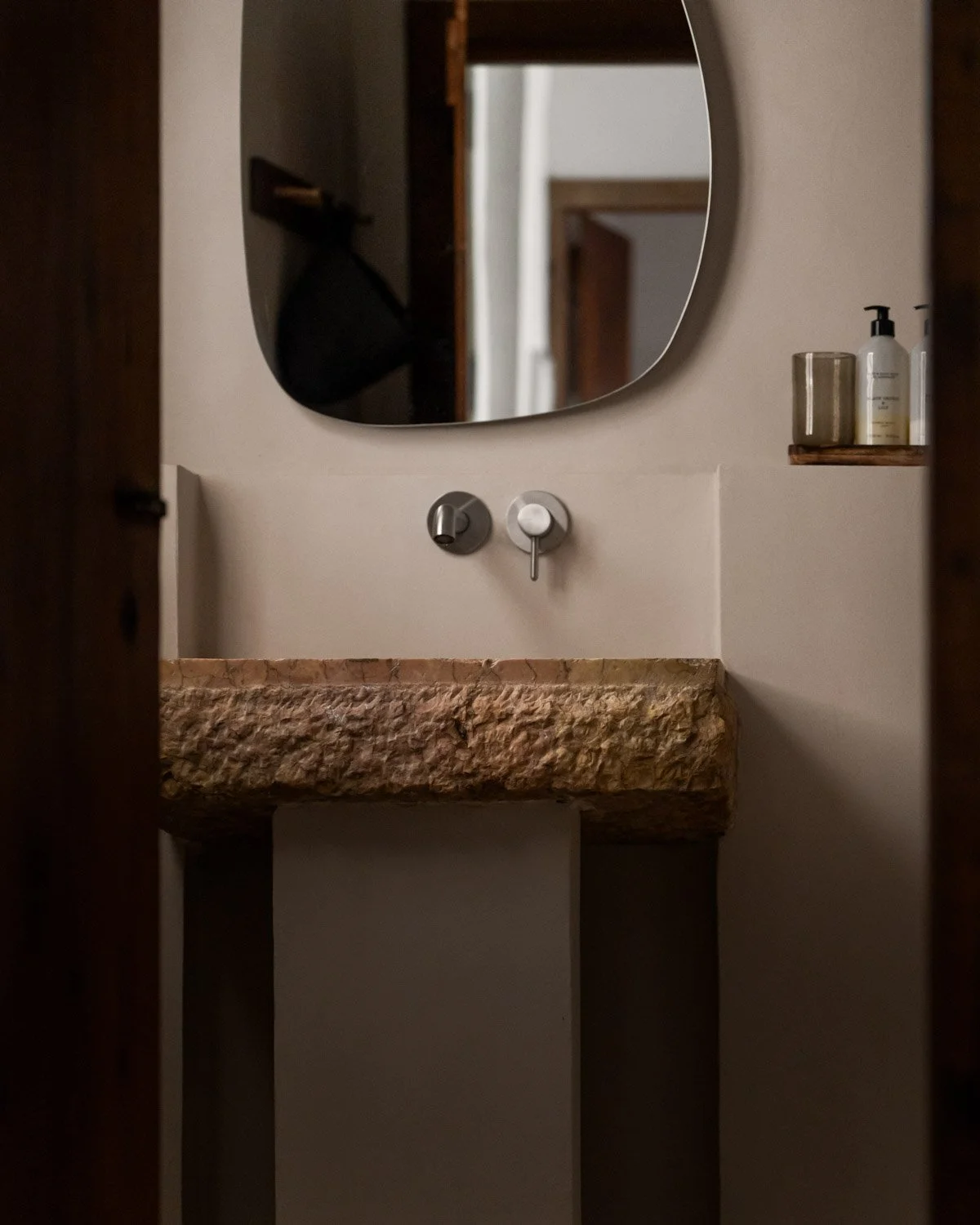
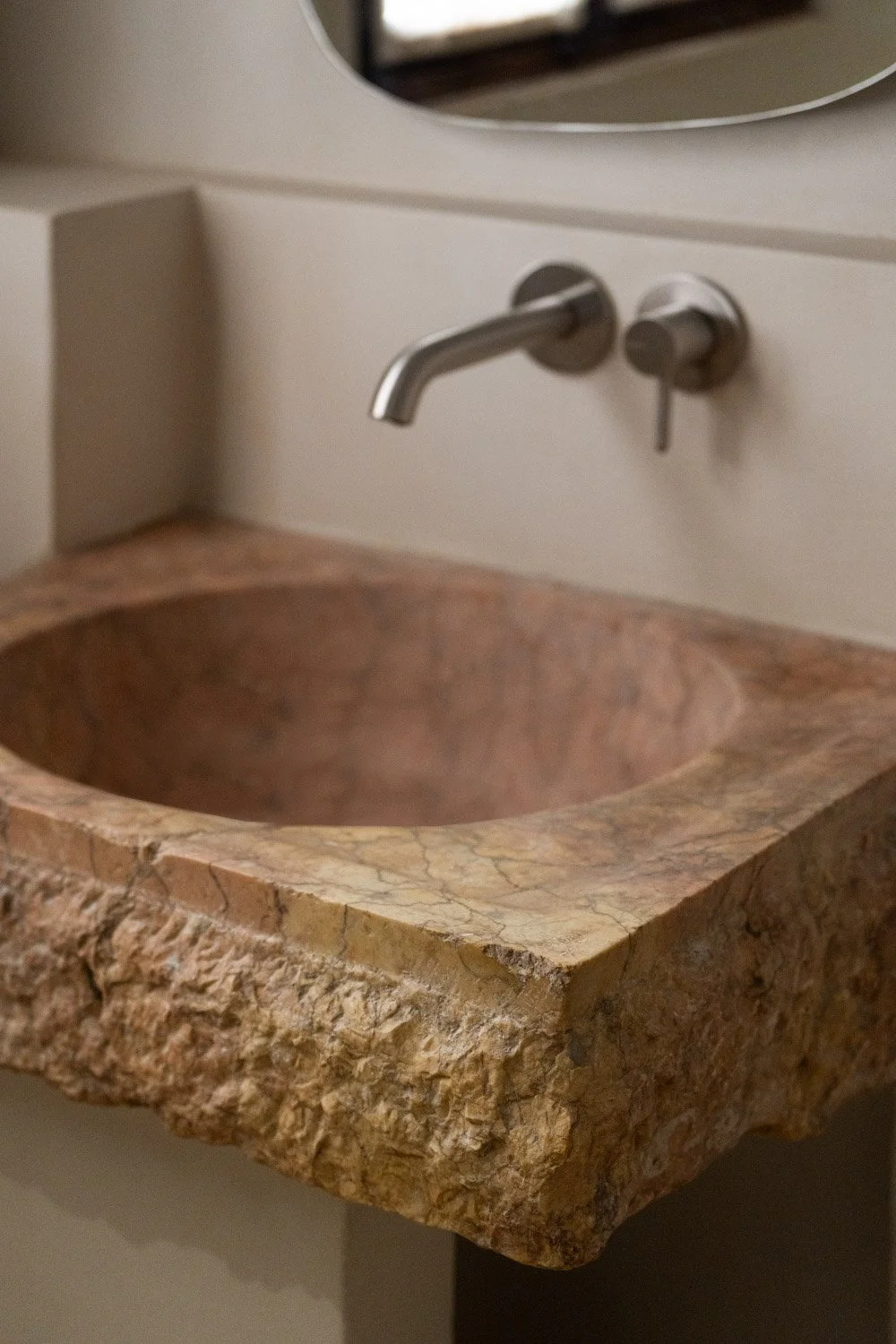
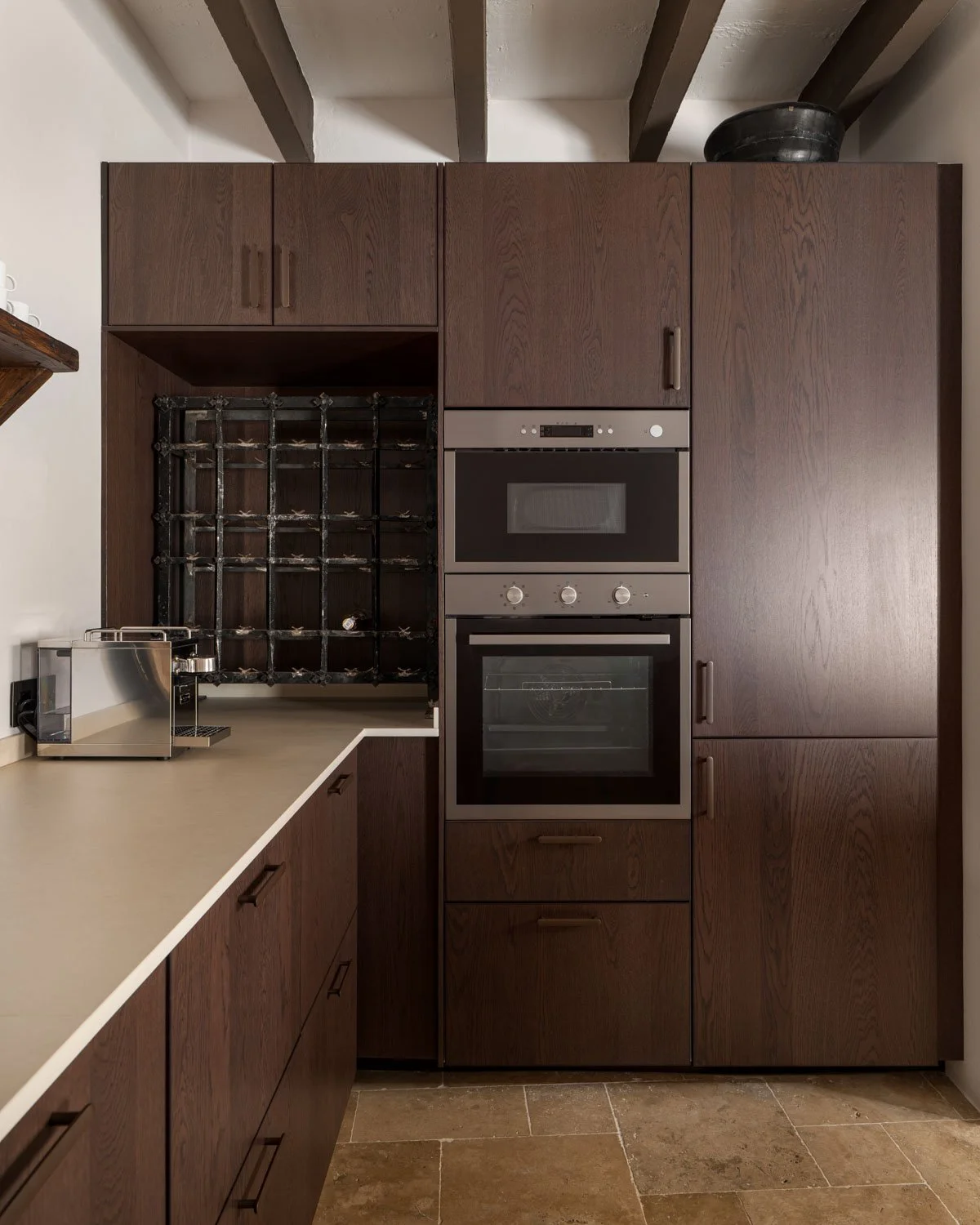
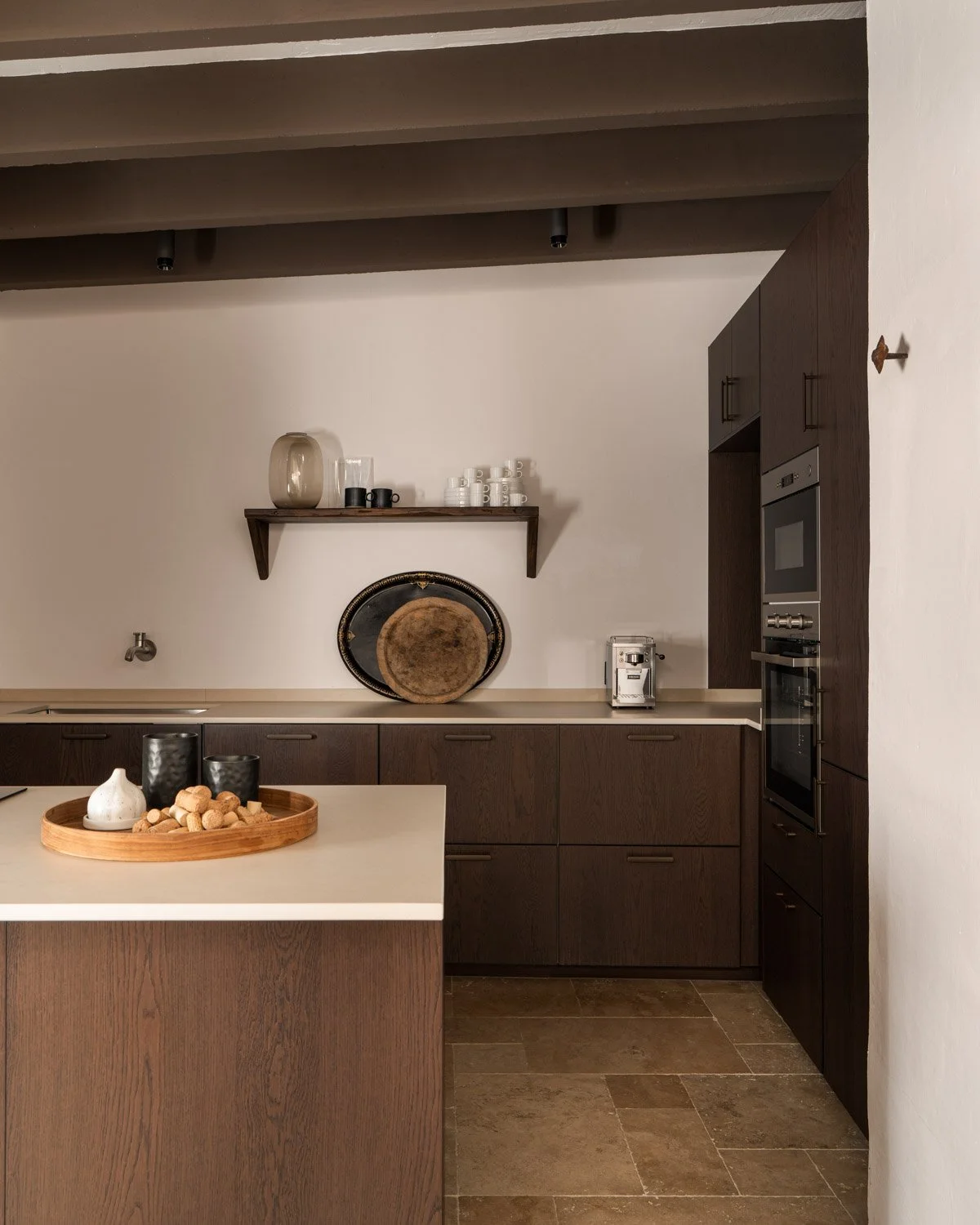
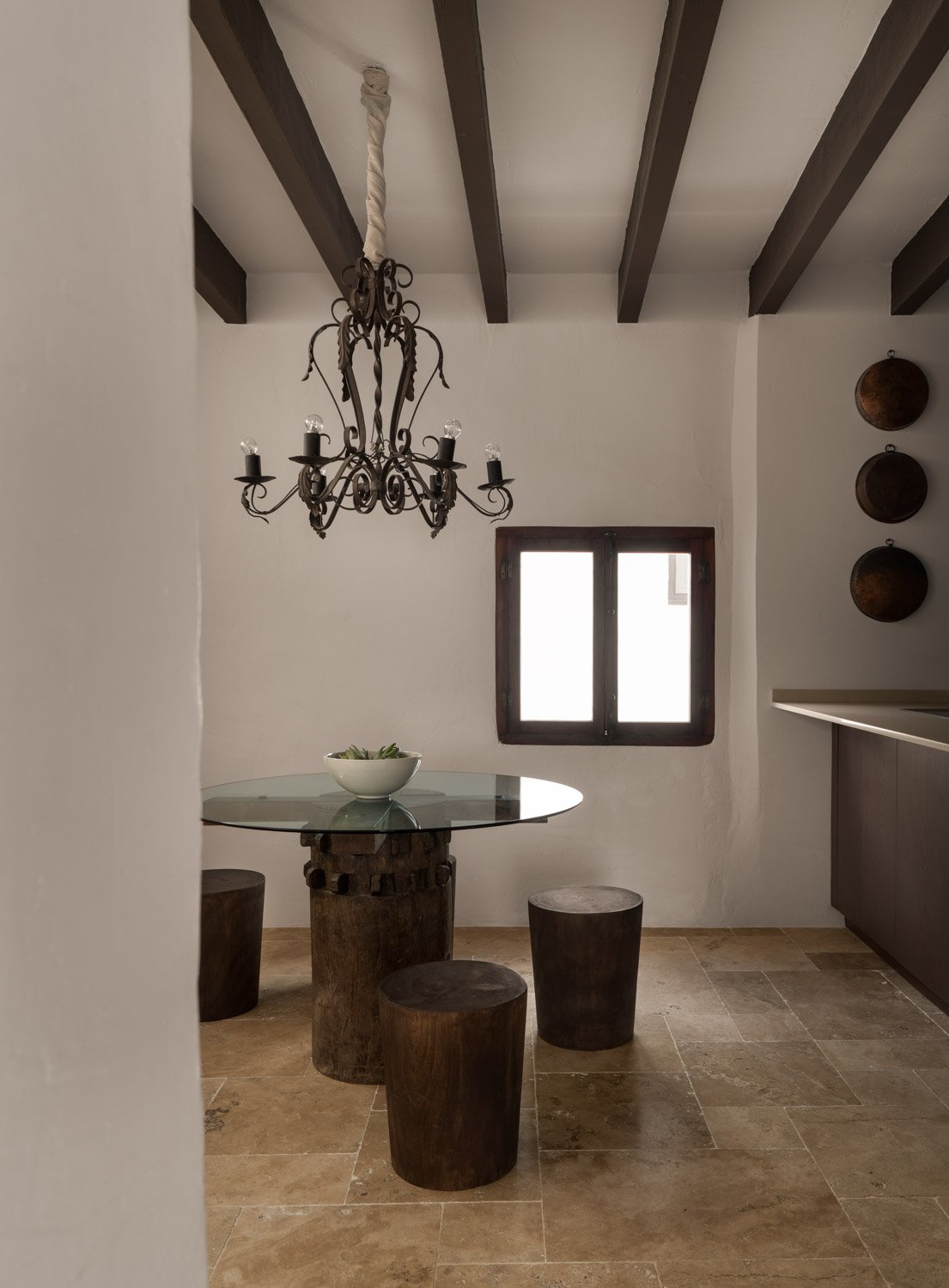
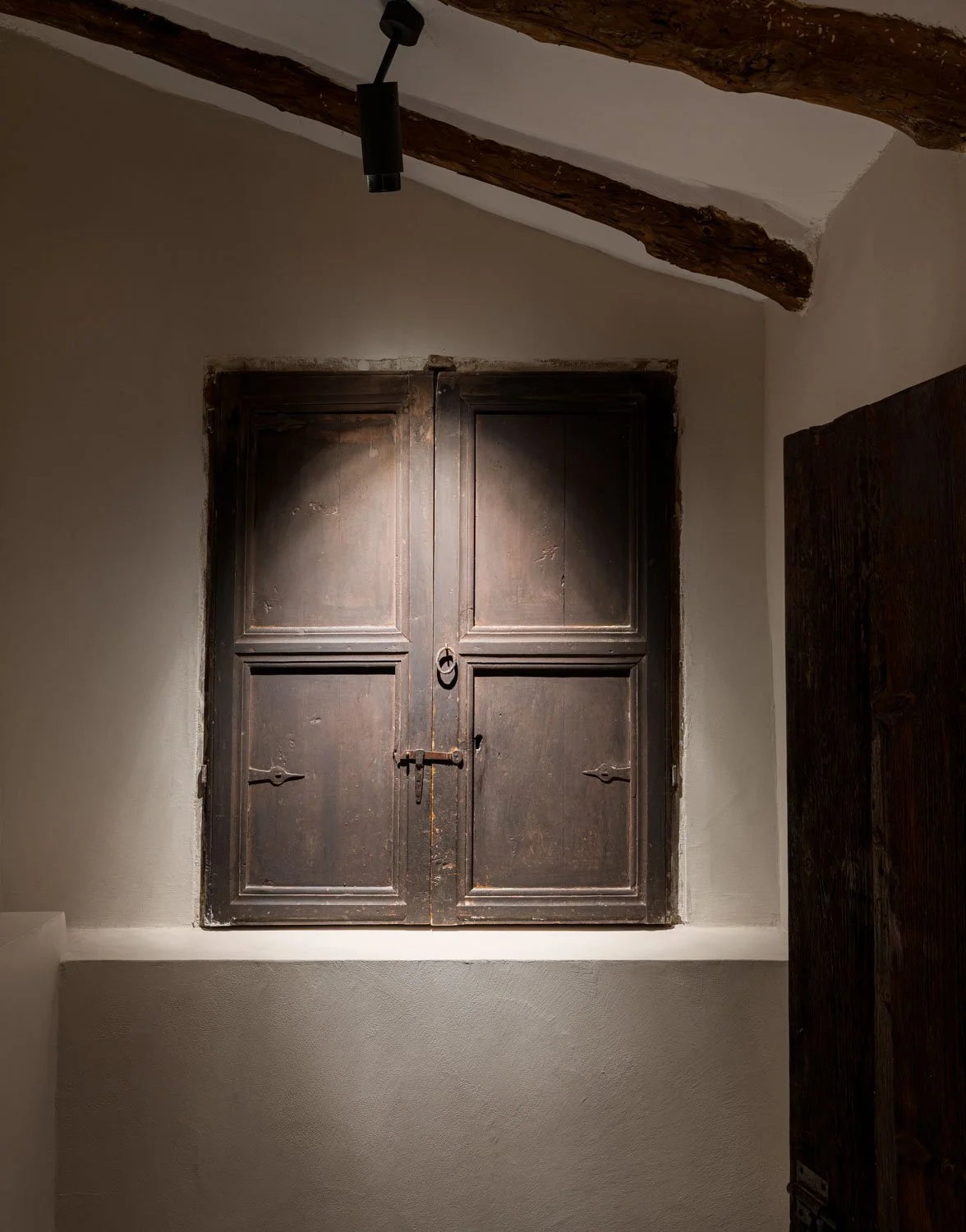
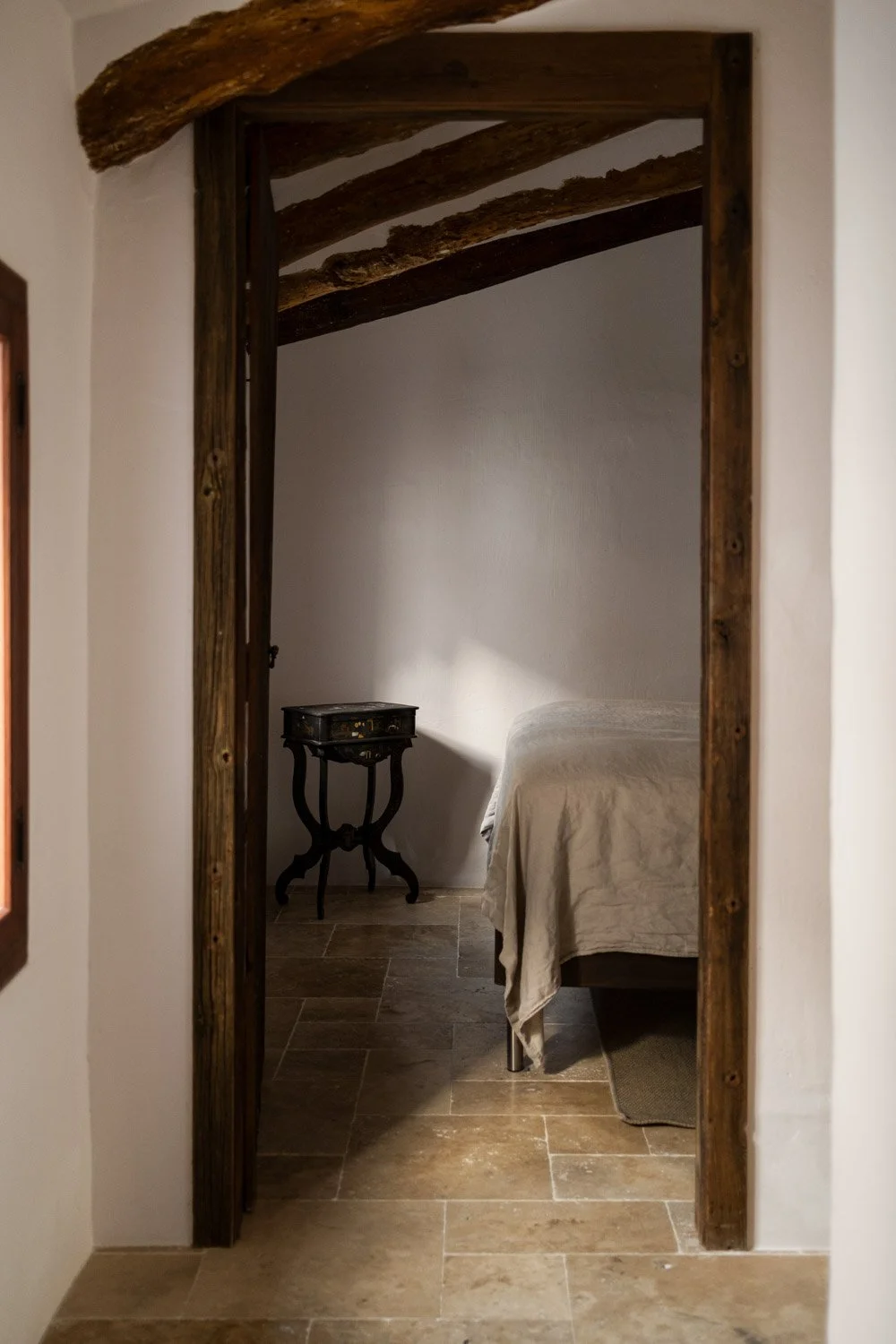
The house was rebuilt around its original materials and finished with a modern palette on top. Walls hand-troweled by local craftsmen. Wooden ceiling beams left exposed and untreated. Stone floors throughout. Restored interior shutters and antique wooden door frames. The new layer added dark stained oak millwork in the kitchen, a custom marble desk on natural stone supports, a hand-carved limestone basin in the bathroom, and microcement walls in the wet zones.
GOAL
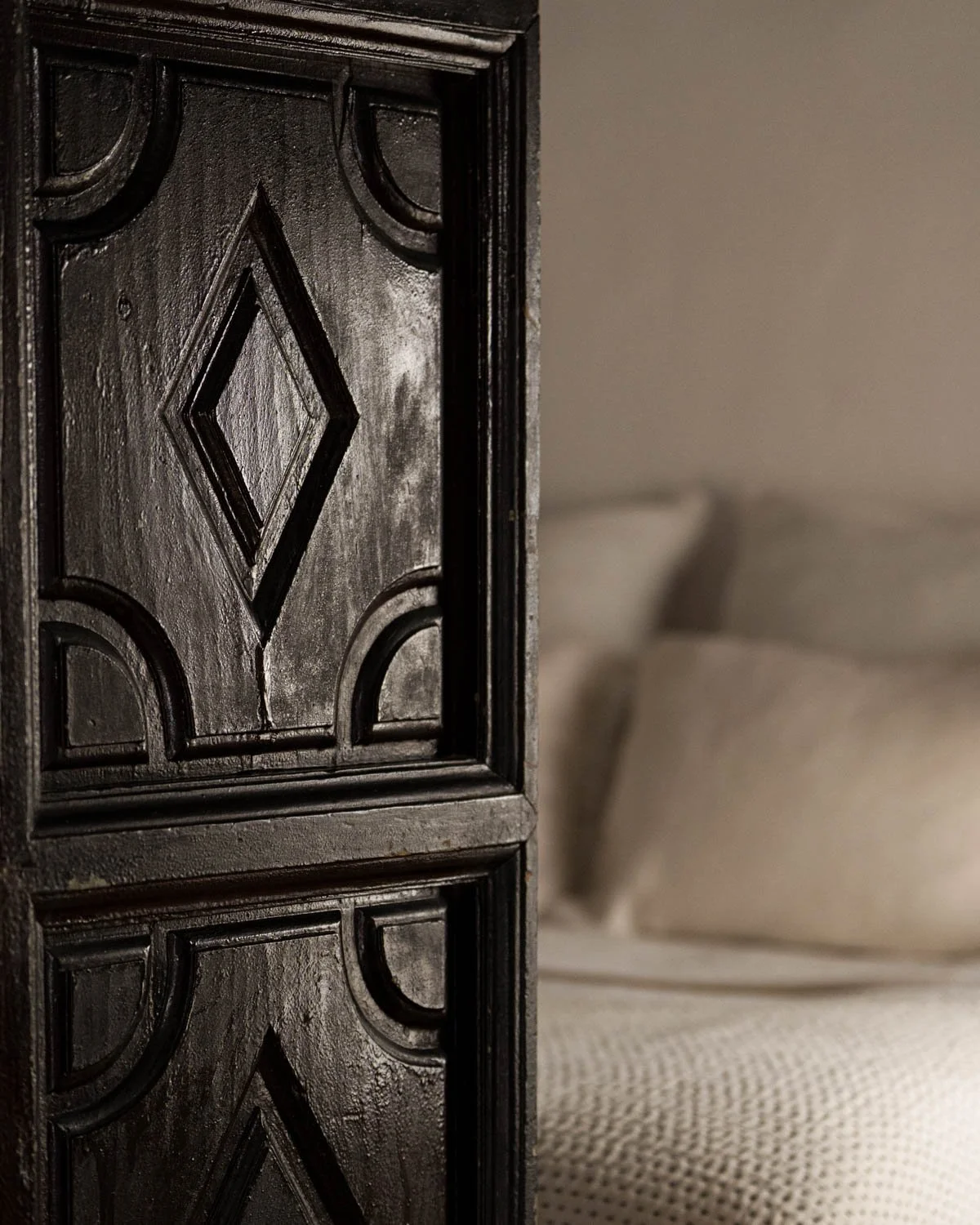
Show both layers of the house with equal weight. The patina of restored elements: carved wooden shutters, antique chests, the original beams. The precision of the new work: the dark oak kitchen, the stone basin cut from a single block, the marble desk. The brief asked for texture, material honesty, and the quiet character of the rooms. No staging, no theatrics.
CHALLENGES
Old town houses fight you on light. Altea's historic center sits in a dense urban grid, with narrow streets and neighbouring buildings that block direct sun for most of the day. The windows are small by design, original to the architecture. Each room held a low ambient level while the few openings let in narrow, hard shafts of Mediterranean sun. The result was strong contrast between bright window frames and deep shadow, with the risk of losing detail in both the dark restored wood and the soft tones of the lime plaster.
STRATEGY
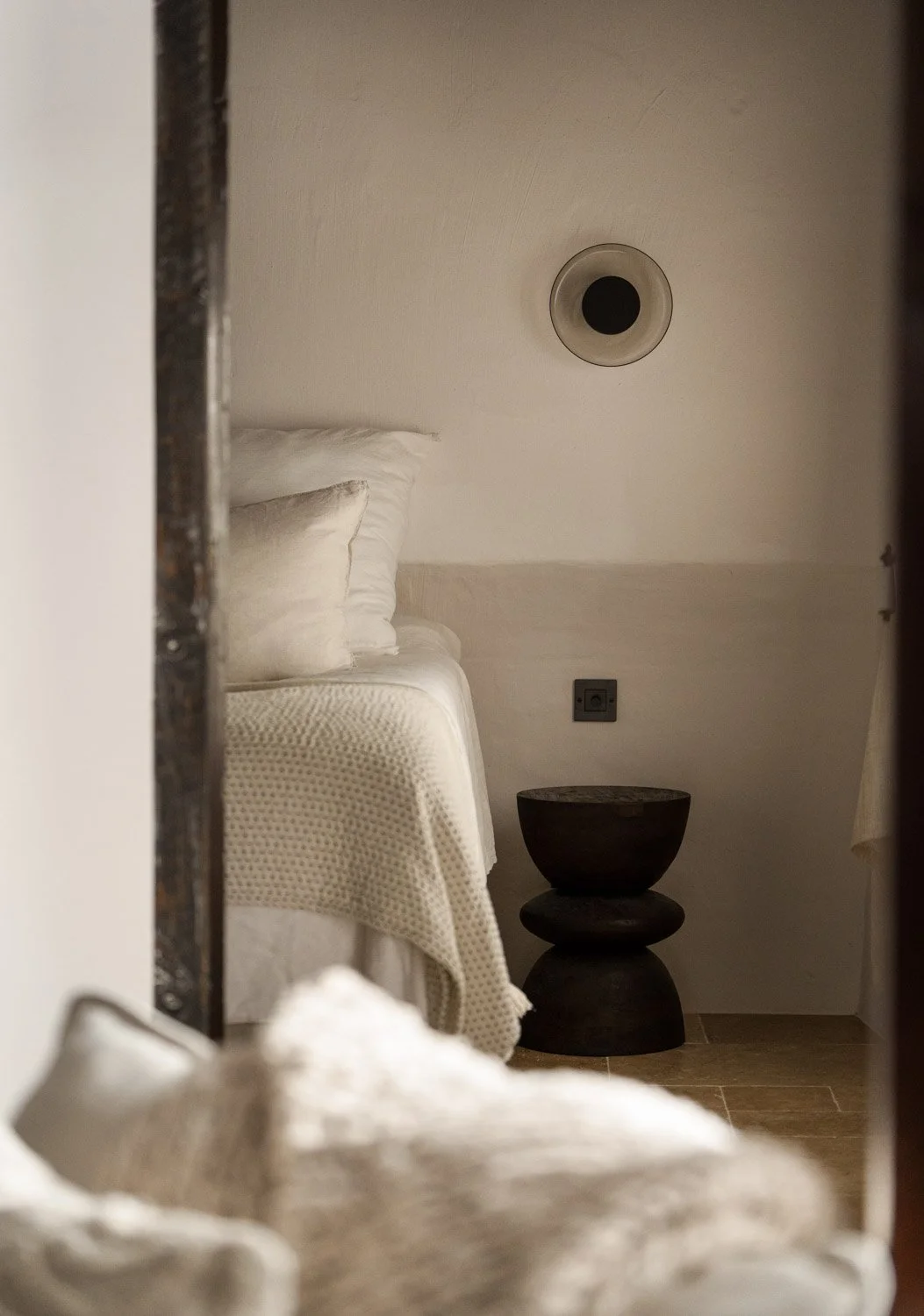
The session was planned around the light, room by room. Each space was shot at the time of day when its windows received indirect light rather than direct sun. This let the texture of the walls, the grain of the beams, and the surfaces of the stone read fully in camera. To raise the ambient level without artificial light, we kept the main entrance door open during interior shots. Daylight reached further into the house through the original passages. For tighter rooms like the bathroom and the rear kitchen, we worked with what the small windows offered and composed around the shadows. Alongside the wide architectural frames, we built a layer of close detail shots: the carved wooden door, the ceramic vessel on a beam shelf, the stone basin, the marble edge of the desk. These carry the material story that defines the project.
RESULT
The final set holds the tonal range of the house, from the deep browns of the antique woodwork to the softness of plaster and linen. Atelier Valencia received a portfolio piece that documents both the restoration and the new design language with equal clarity, ready for studio website, press submissions, and pitching new projects. The session was produced together with a Project Film capturing the same atmosphere in motion, part of a broader documentation approach that pairs editorial photography with cinematic film for design studios. The client confirmed full satisfaction with the result.
Inspired by this project? Let's talk about documenting your next interior design or see more work.